COASTAL WEATHER
Texas Coast: Don’t Confuse Heavy Rain With Coastal Flooding
NOVEMBER 8, 2026 · TNS NEWS DESK
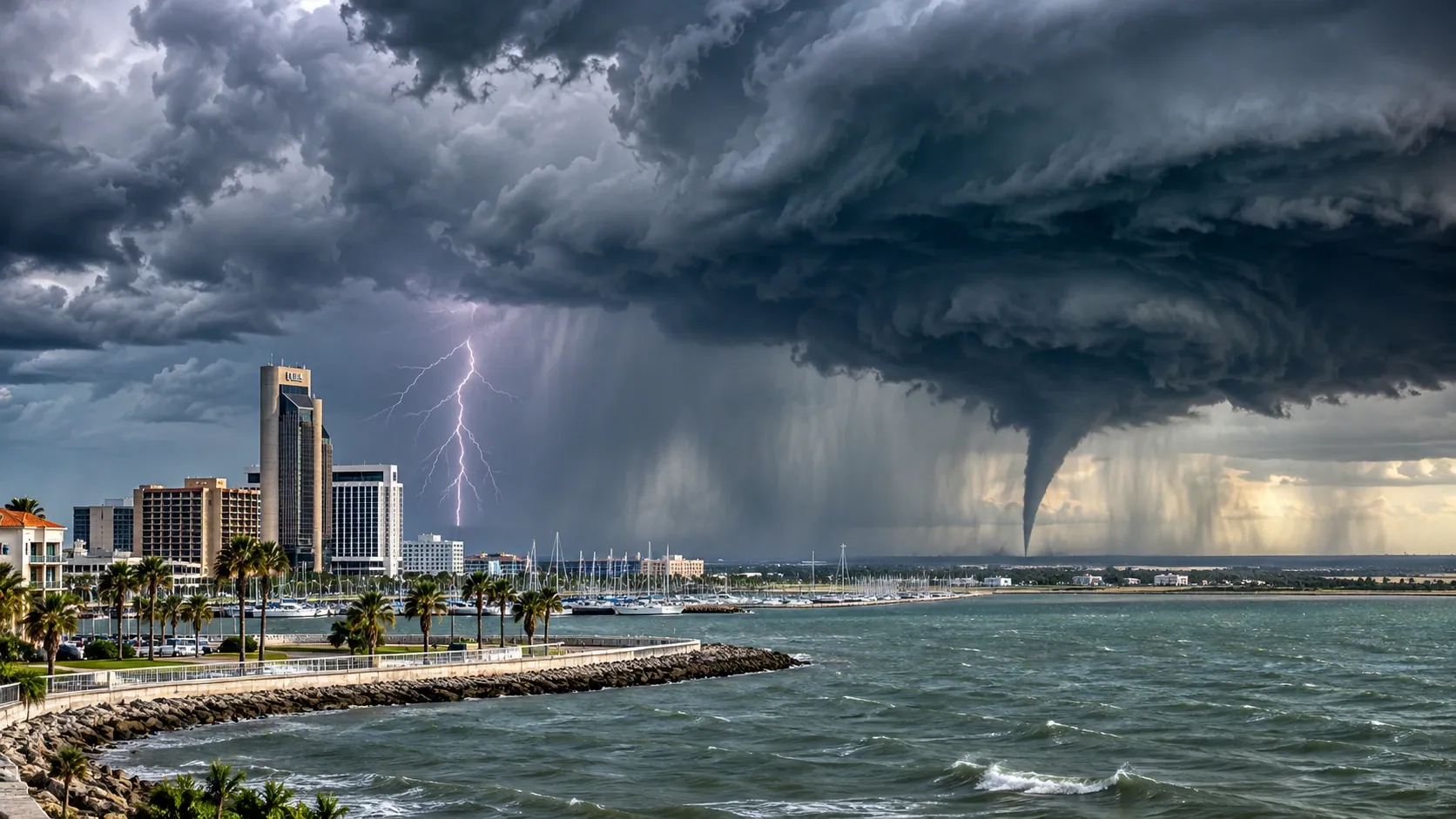
Two different hazards can affect the shoreline, and the distinction matters to people making weekend plans.
The November 8 weather setup has brought a well-documented threat of heavy rain and isolated severe thunderstorms to South Texas. That does not automatically establish a coastal flood warning for every Gulf beach or marina. Coastal flooding depends on tides, wind direction, water levels and the particular shoreline—not simply on how hard it rains inland.
The Storm Prediction Center’s Sunday outlook placed a small part of South Texas under a Marginal Risk for severe storms. Its concerns included isolated damaging winds and perhaps a brief tornado. The Weather Prediction Center separately highlighted heavy rain and localized flash-flood potential. Those are distinct forecast products addressing distinct hazards.
For people along the Corpus Christi area coastline, the useful question is what the local National Weather Service office is issuing for the exact beach, bay or road they plan to visit. A coastal flood advisory, high surf advisory and rip current statement each describe different conditions and should not be substituted for one another.
Boaters should also check marine forecasts, which may be more relevant than a general city forecast. Wind gusts, wave heights and thunderstorm timing can turn an otherwise ordinary outing into a bad decision.
TNS is not labeling the entire Texas coast under a confirmed flood alert without a current product to support it. The verified news is that South Texas has an active rain and thunderstorm threat; any specific coastal warning should be checked against the live NWS advisory list.
Sources and continuing coverage
www.weather.gov · www.spc.noaa.gov
Published November 8, 2026. Forecasts and warnings can change. TNS analysis is distinguished from official weather alerts and verified reporting.