IRAN WAR ALERT: U.S. AND ISRAEL WEIGH RENEWED STRIKES AS POST-ELECTION WINDOW OPENS
New military planning reports sharpen questions about possible action in the coming days — but a major weekend offensive has not been confirmed.
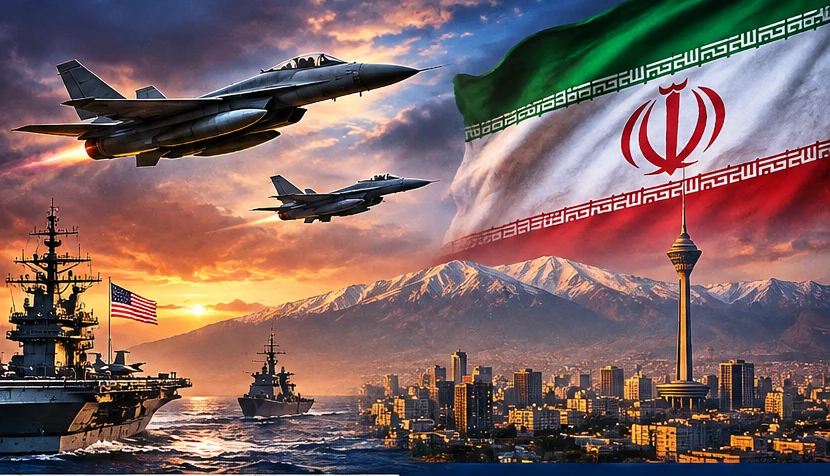
AI-generated editorial illustration of Iran and the region. Not an actual photograph, verified deployment image, or operational map.
WASHINGTON / JERUSALEM / TEHRAN — The prospect of renewed large-scale American and Israeli attacks on Iran is back at the center of international attention after the U.S. midterm elections. Military options have reportedly been developed, Israel has pressed Washington to act, and President Donald Trump faces a consequential choice between escalation and diplomacy. The possibility of action in the coming days has fueled urgent speculation — but the available reporting does not confirm that a new major attack has been ordered.
What changed after the midterms
The November 3 elections removed a deadline that had shaped weeks of speculation about renewed attacks. ABC News reported in October that U.S. and Israeli military planners had developed options for strikes after the vote. The New York Times, cited in that reporting, described preparations for a short, intensive operation. These reports concern contingency plans, not a publicly confirmed order to execute them. The timing matters because officials and observers had anticipated that any decision would be more likely after voting ended.
Trump faces a decision — not a confirmed launch order
The Associated Press reported November 5 that President Donald Trump is weighing how to proceed following Republican midterm losses. Options discussed by analysts include maintaining pressure and limited defensive operations, targeting Iranian military infrastructure, or seeking a diplomatic exit. Israeli Prime Minister Benjamin Netanyahu has pressed for renewed strikes, according to AP reporting, but Trump did not commit to action in their reported conversation. That is a critical distinction: readiness and political pressure do not establish authorization.
Could strikes come this weekend?
A weekend operation is one possible scenario because the post-election window is now open and military planning has been reported. But Texas News Studio has not independently verified a specific weekend attack schedule, a final presidential authorization or a coordinated U.S.–Israeli launch order. Readers should treat claims of a precise date, hour or target list cautiously unless confirmed by credible, attributable reporting. A military operation could also be delayed, modified or abandoned in favor of negotiations.
What military planners could be considering
Earlier reporting described possible campaigns against Iranian missile and drone capabilities, command structures and nuclear-related facilities. These are reported categories of options, not a verified list of approved targets. A short operation might seek to degrade specific capabilities; a wider one would carry far greater risks, including retaliation and damage to civilian infrastructure. Neither outcome is inevitable. Military exercises and deployments can also be used to deter an adversary or strengthen a negotiating position.
The Strait of Hormuz remains a flashpoint
Reuters reported on November 5 that Iran's Revolutionary Guard said two tankers and a tugboat caught fire in separate incidents in the Strait of Hormuz. The IRGC attributed the incidents to vessels navigating unauthorized routes; its account should not be treated as independent proof of the precise causes. Regardless, the incidents underline the vulnerability of commercial shipping and the danger that a maritime confrontation could complicate the larger military and diplomatic picture. The strait is a major energy transit corridor, so any sustained disruption could affect global markets.
Iranian retaliation and regional spillover
Iran has warned against a renewed offensive. Regional governments are concerned that a major attack could bring retaliatory action against American and Israeli interests, further disruption to Gulf shipping, or renewed activity by Iran-aligned groups elsewhere in the region. Such responses are possibilities, not established future events. A wider confrontation could also undermine ongoing mediation and place neighboring states under pressure to choose sides or defend their territory.
Diplomacy has not disappeared
Alongside the military planning, diplomatic channels have remained active. Reporting this week describes efforts involving regional mediators and discussions over possible ways to limit the conflict. Diplomacy and preparations for force can occur simultaneously. The key unresolved question is whether the White House views negotiations as a viable route to its objectives or decides additional military pressure is necessary.
Texas News Studio assessment
The next 48 to 72 hours deserve close attention, but the available public evidence supports a measured conclusion: the risk of renewed major strikes is elevated, while the exact timing and scope remain unconfirmed. The strongest indicators to watch are attributable White House and Pentagon statements, verified military announcements, reliable reporting on negotiations, and independently corroborated developments affecting Gulf shipping. TNS will update this report when new evidence materially changes that assessment.
- Associated Press, Nov. 5 — Trump weighs next move
- Reuters, Nov. 5 — Strait of Hormuz vessel incidents
- ABC News — U.S., Israel drew up post-election strike plans
- Times of Israel — reporting on New York Times planning disclosures
- Washington Post, Nov. 2 — prior limited defensive strikes
Editorial note: This report separates attributed reporting from TNS analysis. The graphic is illustrative, not evidence of troop movements or strike locations. Publication date: November 5, 2026.
FOLLOW TEXASNEWSSTUDIO.COM FOR URGENT UPDATES.