CHARRED WOOD FOUND 30 FEET BELOW POSSIBLE NOAH'S ARK SITE — BUT MYSTERY REMAINS
November 10, 2026 · Texas News Studio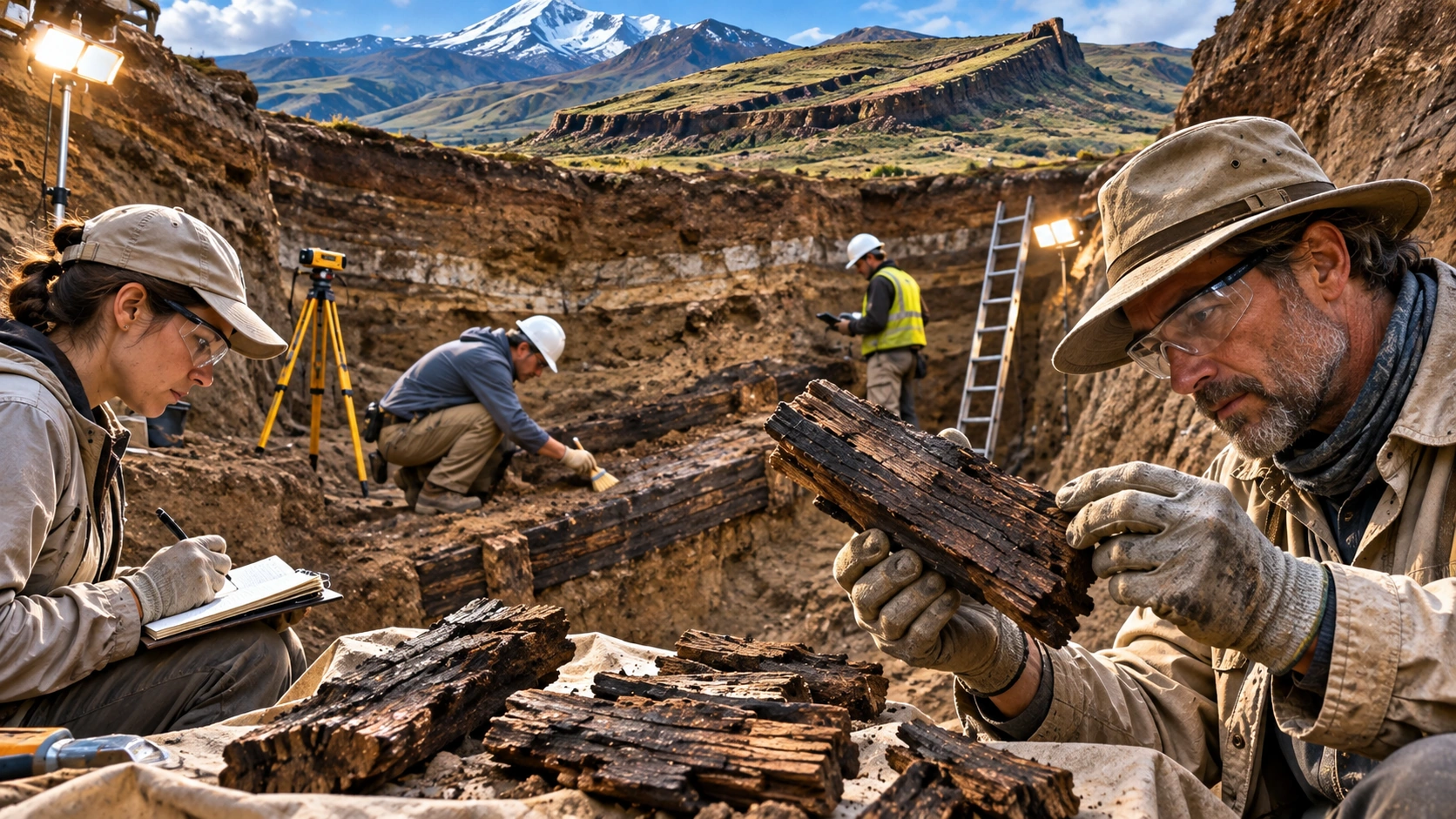
Deep beneath a boat-shaped formation in eastern Turkey, researchers say they have recovered darkened wood fragments. The find is intriguing, but no laboratory result has yet tied the material to Noah's Ark.
The fragments were recovered roughly 30 feet below the surface of the Durupınar formation, near Mount Ararat. The formation has attracted attention since 1959 because its outline resembles a vessel. Researchers working with the Noah's Ark Research Project say the material includes pieces that appear charred, and they have submitted samples for radiocarbon dating and species identification.
What researchers actually found
Archaeologist Cenker Atila, who is overseeing the work, says the fragments came from deep within the formation. The team has also collected soil cores and conducted subsurface surveys in search of patterns that might indicate a human-built structure. Researchers have interpreted some radar features as possible compartments or corridors, but those interpretations have not been independently established as architectural remains.
Testing at laboratories in several countries is expected to help determine how old the material is and what kind of wood it might be. Even if the fragments prove ancient, scientists would still need to establish their original context and whether they were associated with a constructed vessel rather than a natural deposit or later human activity.
A longstanding geological dispute
The Durupınar formation is not universally accepted as an archaeological site. Geologists Lorence Gene Collins and David Franklin Fasold argued in a 1996 study that it is a natural rock structure. Supporters of the Ark hypothesis dispute that explanation and point to the formation's outline, reported soil differences and recent drilling results. None of those observations, by itself, establishes the presence of the biblical ship.
That distinction matters: a discovery of wood underground is evidence that wood exists at that location, not proof of the origin, purpose or age of a ship. The forthcoming laboratory findings could strengthen or weaken the team's interpretation.
What happens next
The research team hopes to continue fieldwork in 2027, subject to permits and the results of ongoing analyses. For now, the most consequential evidence is still pending. The story is a developing archaeological investigation, not a confirmed discovery of Noah's Ark.
Sources: Fox News Digital, November 10; The Jerusalem Post, October 22; NewsNation interview, November 4.