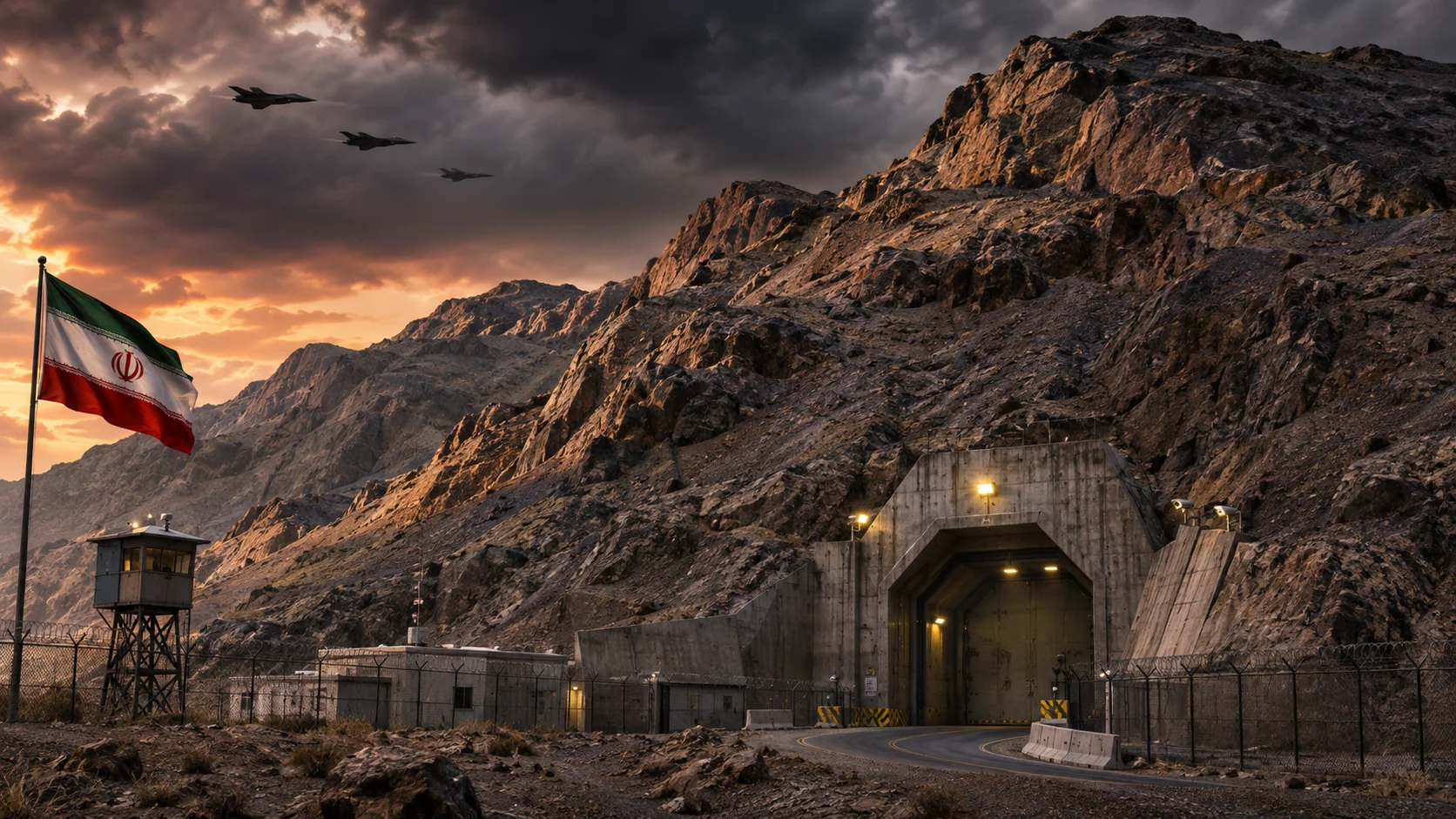
NUCLEAR FEARS: IS PICKAXE MOUNTAIN BECOMING THE NEXT FLASHPOINT?
A British newspaper report has raised an unsettling question: Are Iranians preparing for the possibility of an American attack on a heavily protected mountain site? The distinction between reported fears and a confirmed military decision matters enormously.
A mountain, a military question, and enormous stakes
There is a reason underground facilities draw so much attention during a confrontation over Iran's nuclear program. Depth, geology, reinforced entrances and restricted access can make a facility harder to assess—and harder to damage—from the air. But public discussion of a potential target is not the same thing as a verified target list.
Pickaxe Mountain has entered the public conversation as reporting focuses on Iran's protected infrastructure and the possibility of further U.S. military action. The precise condition, capabilities and role of any underground complex cannot be established from dramatic images or speculation alone.
What does “nuclear attack” actually mean?
The phrase can describe two very different things: an attack on a nuclear-related site, or an attack using a nuclear weapon. They must not be confused. Claims that Iran is preparing for a U.S. nuclear-weapon strike require especially strong evidence. TNS has not independently verified that such a strike is planned.
Even a conventional strike on a facility associated with nuclear materials could prompt concerns about contamination, depending on what materials are present, the design of the facility and the nature of the damage. The actual public-health consequences cannot be forecast without those facts.
Why preparations do not prove an attack is imminent
Governments and communities sometimes make contingency plans for severe, low-probability scenarios. Emergency instructions, shelter planning or public discussion of protective measures may reflect concern rather than intelligence confirming an imminent event. The key questions are who issued the guidance, what exactly it said, and whether officials have independently corroborated the threat.
The danger of escalation
Any new strike could increase the risk of retaliation, further military exchanges, and disruption to regional airspace and shipping. The potential economic effects would depend on the scale and duration of any confrontation, especially around important energy routes. Those are risks to watch—not outcomes that have already happened.
What TNS is watching next
The most important developments would be attributable statements from U.S. and Iranian officials, independent reporting on any military movement, new International Atomic Energy Agency information, and verified changes to regional security conditions. Readers should be cautious of viral videos, unlabeled AI images, and headlines that present scenarios as completed decisions.
Bottom line: The report deserves attention because of the consequences if tensions escalate. But there is a wide gap between reported preparations, speculation about a target, and confirmation of an American attack—particularly one involving nuclear weapons.
The Times: thetimes.com (original article should be consulted for the exact claims and sourcing). International Atomic Energy Agency: IAEA News Center. U.S. Department of Defense: Defense Department News.
Editorial note: This is original TNS analysis of a reported claim, not independent confirmation of the underlying allegation. The illustration is fictional.